Hi All,
After a hiatus of over a year, the Grape Press is back in action with a new hopefully refreshing focus. Not that the old focus was a problem, it's just that there was none. Now that I am settled in one of the most exciting places in the world I am setting out on a mission to investigate the wine culture of London. It's eccentricities, it's strangeness and whatever else I may find.
I'll be posting regular updates on the restaurant scene, focusing first on my Autumnal journey through London's sherry scene and a look at what the capital has to offer in proper Spanish food, but obviously I won't be limited to just that!
Do check regularly - I'll be posting more often to Instagram and Twitter and am happy to take suggestions on what I should be looking out for!
Much Love,
G
Showing posts with label sherry. Show all posts
Showing posts with label sherry. Show all posts
Wednesday, 26 August 2015

Wednesday, 12 June 2013
The Joy's of Being Rich
 Hey Everybody,
You know, sometimes it's nice when a revitalised producer does something extraordinary and sticks to traditions all at the same time! It has become the accepted norm that when a distillery reopens or rebrands itself, there follows a torrent of experimental bottlings of what can hardly be recognised as Single Malt Scotch Whisky. While exciting, it is always refreshing to see a distillery as comfortable in it's own identity as GlenDronach. The whisky world must have been pleased to see the resurrection of this once proudly sherried Highland gem as it seemingly picked up just where it left off.
I first came across GlenDronach several years ago when all I wanted from a whisky was oily texture, smells of the sea and waves upon waves of peat-reek. I decided that I had found myself in a rut and needed to find a way to branch out into the rest of the world of whisky and on the recommendation of a very helpful bartender in Edinburgh, I tried the 15 year-old and credit it with opening my tastes to the world!
With the benevolent new owners, BenRiach gently steering GlenDronach's revival, a range of stunningly beautiful whiskies have been created with a clear theme: no chill-filtration, no colouring and plenty of sherry richness. The basic range of whiskies, the 12 year-old Original, the aptly named 15 year-old Revival, and the 18 year-old Allardice (named for the distillery's founder) have put a trio of essential whiskies on merchants' shelves.
The 12 is a spicy, chocolatey and smooth dram at a reasonable price, while the 15 is an iconically rich, opulent whisky showing notes of Christmas cake and dried cocoa. The 18 is nothing short of a masterclass in the application of Sherry barrels to whisky! With it's dense, rich and comforting aromas of figs, cinnamon and clove, full body and long finish it is not a beginners whisky, but something for the experienced enthusiast with a good long time to spend savouring and appreciating the deep amber spirit in the glass.
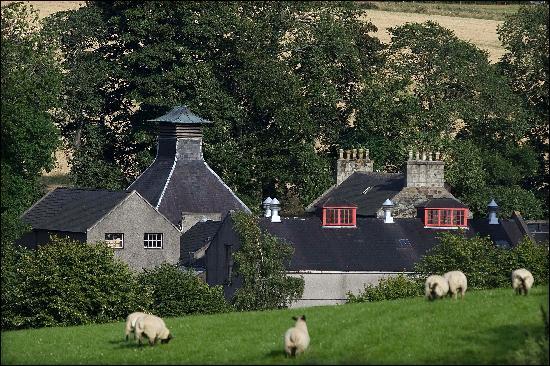 As it helped me expand my tastes, I consider GlenDronach to be the perfect whisky for anyone looking to expand theirs. Whether you like the peaty, smoky malts of Islay, or the lighter Speysides and Lowland malts, GlenDronach helps to break you into the richly opulent world of intensely Sherried whisky. Suspend what you know about your preferences and enjoy something different! Perfect for cold winter evenings around Christmas time, or to accompany rich chocolate dessert, any one of these bottlings would be an essential addition to a malt-lover's collection.
In an age of tremendous demand on the big brands of whisky, notably those in the Diageo stable, the most reassuring element of the trade is that there distilleries like GlenDronach putting forward such beautifully traditional, yet completely satisfying whiskies. We can all take a page from GlenDronach's book and be proud of who we are!
Much Love,
G
Tuesday, 8 May 2012
Madeira: Too Often Overlooked
 Hey everyone,
Today I am trying to find out some stuff about Madeira. I know Madeira as a sweet fortified wine from the Portuguese island of the same name. Although I've had a bit of Madeira in the past, I never really got my head around it as a wine, and always thought of it in the same way I thought of sherry before I made an effort to understand it. As I sit down with a couple samples of quality Madeira, I have every expectation that my horizons will be suitably expanded as was true when I set my mind to sherry.
It originally came as something of a surprise when I learned that not all Madeira is sweet. I usually assume that the fortification process is intended to stop fermentation while the wine still has a large amount of sugar in solution, and thereby maintain sweetness. Oh, how wrong I was!
The very first wine I am trying is expressly dry. Made by Madeira Barbeito from a single grape variety, Sercial, being the classic ingredient for Madeira, this is very much a dry wine which reminds me somewhat of some drier Marsala. It is definitely an appealing glass of wine. It is fragrant with hints of orange peal, lemon zest and pineapple as well as a touch of vanilla from the toasty oak. The palate is far from boozy. It carries it's 19% ABV with a good bit of grace. Te palate is big and mouth-filling with plenty of almond and fig flavour. Ten years of barrel ageing has turned this bright crisp wine into a rich, dry and almost nutty bottle of very appetising wine. It would be perfect with a bowl of roasted almonds, olives or other finger foods before a big dinner.

.JPG) Now onto the third example of Barbeito's 10-year-old Madeira, this time made from the Boal grape. Labelled as semi-sweet, the nose is laden with a bit more of a floral profile. It smells a bit of lychee, lemon, furniture polish and perhaps some violets. The furniture polish and the lemon are a bit bigger than the other aspects, but the nose is appealing for sure. The palate is definitely sweeter. It is nutty, tasting of roasted almonds and has a rather more viscous texture. Not quite the accompaniment to dessert I tend to associate with Madeira, but it could definitely do nicely with some crumbly cheeses and biscuits.
Now onto the third example of Barbeito's 10-year-old Madeira, this time made from the Boal grape. Labelled as semi-sweet, the nose is laden with a bit more of a floral profile. It smells a bit of lychee, lemon, furniture polish and perhaps some violets. The furniture polish and the lemon are a bit bigger than the other aspects, but the nose is appealing for sure. The palate is definitely sweeter. It is nutty, tasting of roasted almonds and has a rather more viscous texture. Not quite the accompaniment to dessert I tend to associate with Madeira, but it could definitely do nicely with some crumbly cheeses and biscuits.The fourth and final ten year old Madeira, made from the classic grape, Malvasia, is labelled as being quite sweet. The colour is lighter than the rest, being sort of light copper in hue. The nose is quite lit and delicate with a perfume of flowers and citrus. Not as much roasted nuttiness as I got from the others, but a hint of almonds nonetheless. The palate is citric, with enough acid to go well with some heavier creamy desserts, the orange zest comes back in this one and I think it is a very complete wine. I would put it at the top of the list for today's tasting. It is a bit more viscous feeling with a nice rich palate and I think that while it is far from the big sweetness of PX Sherry or many ports, it is definitely an interesting and satisfying wine.
.JPG)
The main character I am getting from my educational tasting of Madeira is that the wines are consistently more-ish. They have a hint of maritime saltiness that is so appetising and makes you want to refill your glass again and again. Another nice thing is that they are really very affordable. At £30 per bottle, these can be opened and tasted and then kept as long as you like. They behave rather like ruby port in that you don't need to drink it all in one go. If you decide to go for a Madeira, I highly recommend the malvasia, as it's sweetness makes it both appetising and satisfying.
I do hope you'll get a chance to treat yourself to some nice Madeira and expand your horizons as I did today.
Much Love,
G
Thursday, 16 February 2012
Spain- First Impressions
Try and remember when wine became special to you. Where were you. Who was there? Are those people still special to you? Are they still in your life?
Can you remember your first experience with wine? By that I mean beyond the first time you had someone older get a box of cheap stuff for you and your friends to get drunk when you were young. I mean that first time you came to the realisation that wine was important and that you truly enjoyed it for its many qualities.
For me it was when I was still quite young, aged 17 and on a school trip in Spain. Before then, I never really liked the wine my parents offered to me from the comforts of home and in all honesty never really took to any alcoholic beverage in any real way. Those were the days when wine was sour, beer was bitter and whisky was petrol.
This taught me that context is everything when it comes to acquiring tastes.
For a young language student heavily intent upon gaining all he can from that journey into a new part of the world, such a context is an irresistible experience. It's hardly surprising that the wine is more engaging, and therefore more enticing when it is part of something greater, something bigger. In Spain, the romance of wine and food was evident at all times; from sherry country in Andalucia to the countless family vineyards of Catalunya, the beauty of Spain's countryside is often intrinsically linked to the beauty of it's wine regions.
Wine goes with everything in Spain to the point that it seems as inherently a part of the Spanish identity as music, religion, food and folklore. Every part of every day can be accompanied by the appropriate wines. I can't imagine anything better than a lunch of fresh Galician seafood with a nice fresh white from Rias Baixas, a lazy afternoon with a chilly glass of fino and a beautiful rich lamb with a rich, spicy Rioja.
What better way to spend the evening, amongst friends listening to live music in a Granada cafe with a big carafe of whatever the house is serving? I can think of nothing better than to while away the day thusly. As a 17-year-old high school kid, I was lucky to have experienced this so young.
To this day I still seek out the perfect example of Spanish wine to remind me of those fondly recalled days of youth. Priorat, Rioja and Ribera del Duero harken back to those days and remind me of the bustle of Madrid, the music of Granada, the flavours of Sevilla and the aromas of Valencia. All reminding me of the first joys I took in wine.
For me those two weeks of adventure in Spain will never be forgotten and the country has always held a special place in my heart as will the friends I shared at experience with. I hope you all have an equally positive memory of your first enchantment with wine.
Mucho amor,
G
 |
| Sunrise over the vineyards in la Rioja |
For a young language student heavily intent upon gaining all he can from that journey into a new part of the world, such a context is an irresistible experience. It's hardly surprising that the wine is more engaging, and therefore more enticing when it is part of something greater, something bigger. In Spain, the romance of wine and food was evident at all times; from sherry country in Andalucia to the countless family vineyards of Catalunya, the beauty of Spain's countryside is often intrinsically linked to the beauty of it's wine regions.
Wine goes with everything in Spain to the point that it seems as inherently a part of the Spanish identity as music, religion, food and folklore. Every part of every day can be accompanied by the appropriate wines. I can't imagine anything better than a lunch of fresh Galician seafood with a nice fresh white from Rias Baixas, a lazy afternoon with a chilly glass of fino and a beautiful rich lamb with a rich, spicy Rioja.
 |
| El Alhambra, the stunning fortress of Granada. |
To this day I still seek out the perfect example of Spanish wine to remind me of those fondly recalled days of youth. Priorat, Rioja and Ribera del Duero harken back to those days and remind me of the bustle of Madrid, the music of Granada, the flavours of Sevilla and the aromas of Valencia. All reminding me of the first joys I took in wine.
For me those two weeks of adventure in Spain will never be forgotten and the country has always held a special place in my heart as will the friends I shared at experience with. I hope you all have an equally positive memory of your first enchantment with wine.
Mucho amor,
G
Subscribe to:
Posts (Atom)